The Evening Handover: Why a 6pm Second Viewing Tells You More Than a Saturday Morning
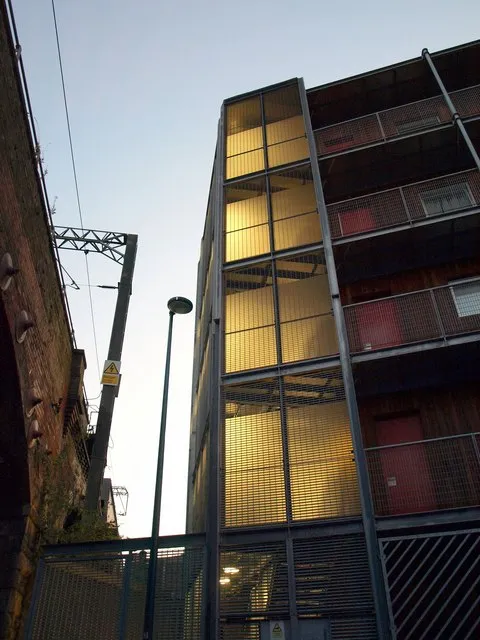
Photo: Derek Harper , CC BY-SA 2.0, via Wikimedia Commons
Most first viewings happen when the flat is on its best behaviour. Mid-morning, curtains open, maybe a scented candle doing more work than the estate agent. But you won't live there at 10.30 on a Tuesday. You'll come home at 6, arms full of shopping, in the dark for half the year. So before you fall for a kitchen, book the second viewing for the hour you'll actually arrive home.
Why the handover hour matters
There's a moment in every building when it stops being a show home and starts being a place where people live. Front doors open, keys turn, shoes come off, someone's kettle goes on, someone else's telly goes up. That's the handover hour. It's also when the things you can't see on a floor plan start to show themselves: the neighbour who parks across your bay, the corridor light that flickers, the lift that groans, the bin store that smells a bit too much like a bin store.
A Saturday morning viewing tells you whether a flat can be dressed up. A weekday evening viewing tells you whether you'd want to come home to it.
The five-minute pavement audit
Before you ring the buzzer, stand still on the pavement. At 6pm, the street shows you its working reality. Are residents circling for parking? Are visitor bays actually available, or are they full of cars that clearly live there? Are the double yellows being ignored? If you drive, this is the moment to test the commute-home parking scramble, not the estate agent's cheerful phrase about 'plenty of street parking'.
Look at the bin store, too. Is it overflowing? Is it right under a bedroom window? Does it smell in the cold? Check the entrance lighting: is it warm and useful, or one weak bulb above a door? Is the front door propped open with a brick? Does the entryphone look working, or is it held together with tape and hope? These tiny details add up to how secure and cared-for the building feels after dark.
The communal corridor test
Estate agents love to hurry you through hallways. Don't let them. In the corridor, stand still for a full minute. Listen. Can you hear a TV through the wall? A dog? A door slamming? The lift humming? Does the stairwell echo like a bus station? Smell matters as much as sound: damp, cigarettes, cooking, or that sharp chemical smell of a recent clean-up.
Look at the noticeboard. Are there warnings about service charges, planned building works, or a broken entry system? Are bikes and prams blocking the fire exit? Is there a pile of parcels that suggests nobody is ever in? For leasehold buyers, the corridor can be a quiet clue about how well the building is run. For renters, it tells you how much neighbours respect shared space, which is often how much you'll enjoy living there.
Inside at dusk: room by room
Start in the living room, but don't flick every light on straight away. See what the natural light is doing at the hour you'll use the room. Is the window east or west facing? Is there a streetlamp glaring through the glass? Open the window for sixty seconds and listen: traffic, a pub garden, a railway line, an extractor fan, a neighbour's kitchen radio. Then close it and see how much noise still gets through.
In the kitchen, run the hot tap and check the water pressure. Ask the agent to fire the boiler if it's safe to do so. Listen to the extractor fan; does it actually pull steam, or just make a noise? Check under the cabinets for lighting and look for any smell drifting in from next door's dinner.
In the bedroom, stand where the bed would go. Listen for the lift, the bin store, the road, or the neighbour's washing machine. Check whether the curtains or blinds actually block light, especially if you're viewing in November when the sun sets before most people get home. Feel near the window for cold spots or draughts.
In the bathroom, run the shower, flush the loo, and check the extractor. Damp doesn't always announce itself, but a chilly, clammy bathroom at 6pm is a useful warning. In the hall, test the entryphone volume and the door closer. Does the letterbox rattle every time someone walks past?
Build a sound map
Every flat has a sound map. Use your phone notes and jot down what happens when. At 6.05 the lift arrives. At 6.15 someone drags a bin. At 6.30 next door's washing machine starts. At 7 the kids upstairs seem to be training for the Olympics. None of these are deal-breakers on their own, but together they tell you what your evenings will sound like.
Ask the agent what's above, below and beside the flat. Ask whether the floors are concrete or timber, and whether the building has any known noise issues. 'It's usually very quiet' is not a legal guarantee. If a noise bothers you at 6pm, it will bother you more at 11pm.
Security and the way home
At night, the route home matters as much as the flat itself. Walk from the nearest station or bus stop as you would after work. Is the pavement well lit? Are there dark alleys or unlit cut-throughs? Does the front entrance feel secure, or does anyone wander in behind you? Is there a concierge, a fob system, or just a door that never quite closes?
If you're buying, ask whether there's been any history of break-ins. The seller may not know, and the agent may not say, but neighbours often will. If you're renting, ask how parcels are handled and whether the building has a secure entry system that actually works.
The questions to ask on the night
A 6pm viewing is a good time to ask practical questions the morning crowd forgets. What's the busiest time in the corridor? Who lives next door and above? How often does the lift break down? When were the windows last replaced? What's the broadband speed like in the evening, when everyone is streaming? Are there any planned works that will affect service charges? Can you see the service charge accounts before you offer?
Also check the small stuff: bin collection day, recycling rules, bike storage, visitor parking, and whether the allocated parking bay is actually usable at 6pm. For buyers, confirm the council tax band and any parking permit rules. For renters, ask what the deposit covers and whether the landlord has ever had complaints about noise.
The coming-home test
Before you leave, stand in the hallway with the lights off and your bags down. Ask yourself the only question that really matters: would I be relieved or deflated to walk in here at 6pm on a wet Tuesday? That's the feeling you'll have a couple of hundred times a year. Saturday morning is for imagining the life. Weekday evening is for knowing whether you'd actually want to live it.