Sun-Shy Rooms: Seven Ways to Brighten a North-Facing Living Room
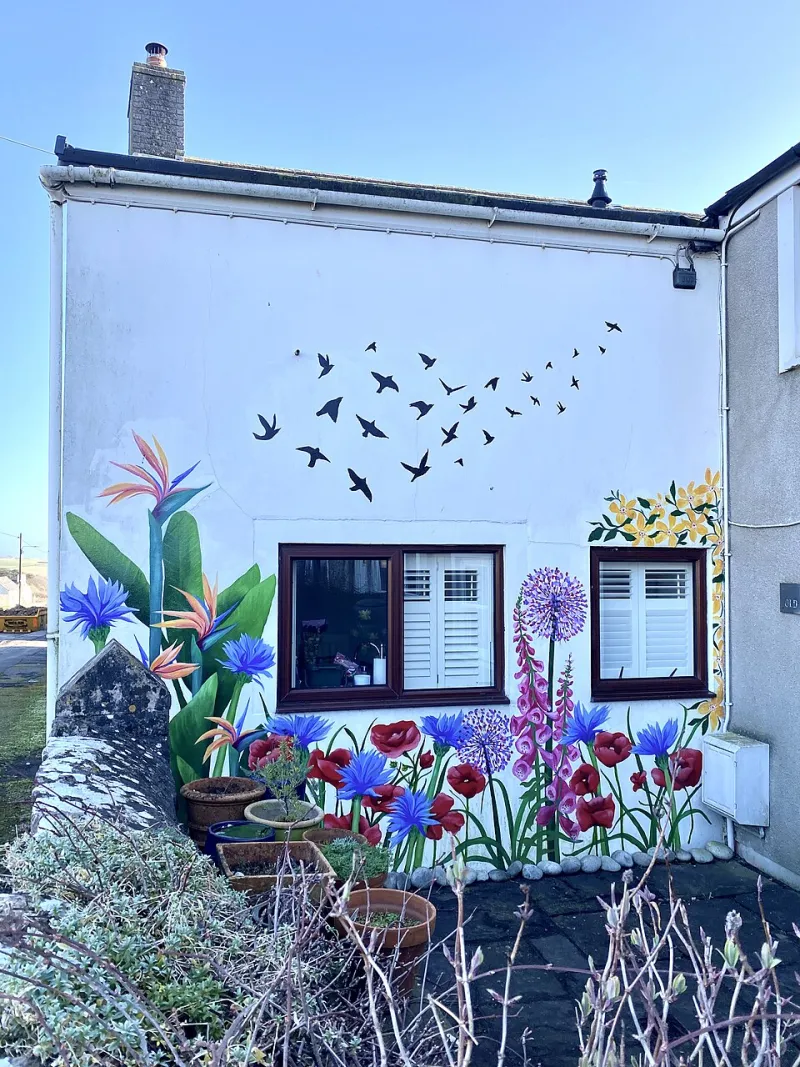
Photo: Alan Hughes , CC BY-SA 2.0, via Wikimedia Commons
Somewhere in Britain this evening, a perfectly decent living room is being described on a floor plan as well-proportioned when what it actually is, for most of the year, is dark. North-facing. Shaded by the terrace opposite. One window, a heavy curtain and a single pendant doing all the work.
Here's the thing though: north light is soft, even and steady. Photographers chase it. It doesn't fade your sofa or glare across the telly at four in the afternoon. The job isn't to fight it, it's to stop wasting it.
Start by watching the room, not the walls
Spend one day in it with a notebook and no agenda. When does light arrive, where does it land, when does it leave? Is the glass clean? Is there a shrub outside doing a very effective impression of a curtain? Is the window sill a museum of half-finished candles?
Most dark living rooms are dark for at least one glaringly fixable reason. Find yours before you buy paint.
One: warm off-whites, and stop chasing brilliant white
Brilliant white in a north-facing room reads grey. Cool light plus a cool white equals a room that looks like a waiting area in February.
Look for warm off-whites with a hint of yellow, pink or stone in them. Check the light reflectance value on the back of the colour card, a number that tells you how much light the paint throws back; anything above 75 is doing proper work. Cool greys recede and go flat.
Buy tester pots and paint large patches on two walls, then look at them at 8am, 2pm and 8pm before you commit. It's the cheapest mistake-avoider in decorating.
And consider drenching the room: walls, ceiling, woodwork and even the alcoves in one soft tone, a shade lighter on the ceiling. Fewer hard contrasts means fewer shadow lines where light gets lost. What you're not doing is painting one dark feature wall and hoping for drama.
Two: give the mirror a job
A big mirror on the wall opposite or beside the window will bounce a second helping of daylight back into the room. Angle it slightly to catch sky rather than floorboards.
But remember that a mirror reflects whatever is in front of it. Point it at a pale wall, a shelf of plants or a framed print, not at a laundry pile or the darkest corner of the flat. A second, smaller mirror in the hallway can push light through an open door into the living room, which is a trick worth knowing in a narrow Victorian terrace.
Three: layer the lamps and buy warm bulbs
The single pendant is why so many British living rooms feel gloomy at half four in November. One light at ceiling height means everything below it is in shadow, including your face.
Aim for at least three sources at different heights: a floor lamp in whichever corner goes dark first, a table lamp beside the sofa, a plug-in wall light that needs no wiring and no drilling, a picture light over a favourite piece. Put the brightest one where you actually read or work.
Choose 2700K bulbs, the warm end of the scale, not 4000K which is office-cold. Go dimmable if you can, and swap dark metal or opaque shades for linen or paper ones that glow instead of blocking.
Four: strip the window back
Heavy curtains drawn at three in the afternoon are a light tax. So are nets, dense blinds and a window sill cluttered with ornaments.
If you need privacy from the street, a half-height cafe-style blind, a linen Roman blind or a film on the lower pane all keep the top half of the glass clear. Hang any curtain pole wider and higher than the window frame, so the fabric sits over wall rather than glass when open. Wash the windows properly, inside and out, and cut back whatever is pressing against them outside.
Five: choose surfaces that bounce rather than swallow
Dark matte floors, dark rugs and chunky dark furniture absorb light like a sponge. Pale wood, a wool rug in oatmeal or soft cream, glass and metal side tables, glazed ceramics and a couple of brass or mirrored pieces will all send light back into the room.
You don't need to replace a grey sofa. A pale linen slipcover or a light throw over the back does most of the work for a fraction of the cost.
Six: drop the furniture height and clear the path
Tall, bulky pieces blocking the window are the enemy. Low furniture lets light travel across the room instead of stopping dead at the arm of a wardrobe-sized bookshelf.
Then be ruthless. Pale rooms show clutter more than dark ones, oddly, because every object becomes a silhouette. Fewer, larger things: one big plant, one good lamp, one generous rug.
Seven: borrow light from next door
If you rent, ask whether you can swap an internal door for a glazed one, keeping the original wrapped up in the cellar to refit at the end of the tenancy. If you own, an internal window or a roof light above a dark hallway is transformative, but it's a project rather than a weekend.
In the meantime, leave doors open, hang a mirror where it can catch hallway light, and paint the hall in the same pale tone as the living room so the two rooms read as one brighter space.
The upside of a sun-shy room
North light doesn't fade fabric, it's kind to artwork and prints, and it's beautifully even for a desk or a reading chair. Add a snake plant, a ZZ plant or a pothos, all of which tolerate low light without drama, and you have a room that feels calm rather than gloomy.
You can't move the sun. You can absolutely stop wasting the light you've got.