Counting Down: Why the Years Left on a Lease Should Matter More Than the Number of Bedrooms

Photo: leasehold flat period conversion exterior London street, via cdn.shopify.com
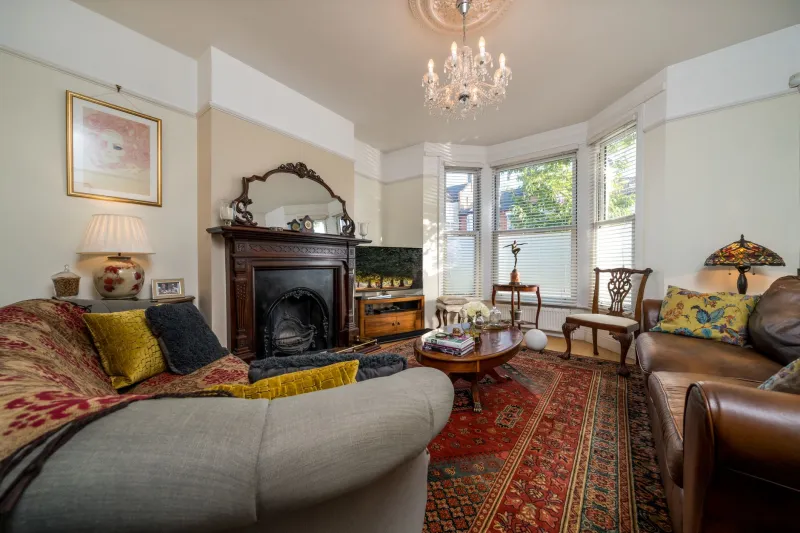
There's a moment in every flat viewing when the sensible part of your brain quietly switches off. It's usually about ninety seconds in, somewhere between the original cornices and the way the afternoon light lands on the kitchen tiles. From that point on, you're not evaluating a property — you're decorating it in your head.
Nothing wrong with that. It's why we look at flats at all. But there's one number that should get a hearing before the daydreaming starts, and it's not the square footage or the service charge. It's the years remaining on the lease.
The number nobody puts on the floorplan
A lease is a very long tenancy agreement. You own the flat for a fixed stretch of time — often 99, 125 or 999 years from whenever the building was first carved up — and when the clock runs out, the flat reverts to the freeholder. In practice, that's a problem for your grandchildren rather than for you. In practice-and-mortgage-terms, though, the number matters a great deal right now, because everything about a short lease gets more expensive the closer it creeps to the wire.
Most buyers arrive at a viewing knowing roughly what a lease is. Very few arrive knowing what theirs says.
Why 80 is the figure everyone whispers about
Eighty years is the threshold that runs through leasehold valuations like a fault line. Above it, extending a lease is, broadly speaking, a straightforward calculation based on ground rent and the value of the flat. Below it, a second ingredient appears: marriage value.
Marriage value is the extra worth created when a short lease and the freeholder's interest are married back together into a single, longer lease. Once you drop under eighty years, the law says a chunk of that uplift belongs to the freeholder. In plain terms, the premium you'd pay to extend jumps — sometimes sharply — and it keeps climbing as the years fall away.
So an 82-year lease and a 78-year lease can look near-identical on paper and behave completely differently in a valuer's spreadsheet. That's the trap. It's not the dramatic 40-year cases that catch people out; it's the ordinary-looking 79-year flat that's quietly sitting on the wrong side of the line.
What lenders actually do with that information
text here
Mortgage lenders don't care about the flat in the way you do. They care about whether they could sell it if everything went sideways, and a lease with a short tail is harder to sell. As a rule of thumb, most high-street lenders want the lease to run for a comfortable margin beyond the end of your mortgage term — commonly something in the region of 70 to 80 years remaining at the point you apply, and more if you're taking out a longer fix.
A 90-year lease on a 25-year mortgage is generally fine. An 85-year lease is usually fine, too, but the calendar starts working against you the moment you complete. Lenders also get twitchy about other lease terms: ground rents that double every decade, permission fees for everything from a new carpet to a cat, or clauses that let the freeholder charge whatever they like forconsent. Those go in the same bucket as a short lease, because they make the flat harder to mortgage for whoever buys it after you.
Read the paperwork before you fall for the place
You can check the lease length yourself before you've even booked a second viewing. The title register is downloadable online from HM Land Registry for a few pounds, and it will tell you the term and the date it started. That's enough to do the subtraction.
The full lease document is a different beast, and this is where your solicitor earns their fee. Ask for it early — before you instruct searches, ideally — and ask specifically about:
- the exact years remaining, calculated from the completion date rather than the listing date
- ground rent, and whether it's fixed, escalating or doubling
- whether the freeholder can charge for consent to alterations, subletting or pets
- any restrictions on renting the flat out, if that's part of your plan
- who actually manages the building, and whether the freeholder is a resident-controlled company
If the seller is already partway through an extension, ask to see the correspondence. A deal 'in progress' is not the same as a deal done.
Extension: two roads to the same destination
There are two ways to lengthen a lease. The informal route is a negotiation with the freeholder — often quicker, occasionally cheaper, and entirely without statutory protection if they decide to be difficult. The statutory route is your legal right, and it comes with a process, a timetable and a tribunal to appeal to if the two sides can't agree a price.
One wrinkle worth knowing: in most cases you must have owned the flat for two years before you can force a statutory extension. That's why buyers often ask the seller to start the process before completion, or negotiate a price that reflects the cost of doing it themselves afterwards.
On reform: the Leasehold and Freehold Reform Act 2024 set out sweeping changes — longer extensions, ground rents reduced to nothing, and a promised overhaul of how premiums are calculated. Implementation has been slow and staged. Some measures are in force, others are still waiting for the detail. If a short lease is on your shortlist, ask your solicitor what the current position actually is in 2026, rather than relying on what a headline said two years ago.
Questions to put to the agent before you offer
None of these are hostile. They're just the things that separate a good purchase from an expensive education.
- How many years are left on the lease, as of today?
- Has an extension been quoted, and can I see the figure?
- Is the ground rent fixed, and has it changed in the last ten years?
- Who is the freeholder, and are they resident-controlled or an investor?
- Are there any known issues with the building's management or service charge accounts?
- Would the seller consider beginning an extension before exchange?
The bottom line
A short lease isn't a dealbreaker. Plenty of people buy them deliberately, extend them, and end up with exactly the flat they wanted. But it should be a decision you make with your eyes open, not one you discover at the mortgage application stage when the lender's valuer starts asking awkward questions.
Check the number. Understand what it costs to fix. Then go back to admiring the cornices — ideally with a slightly better sense of what you're actually buying.