Open, Shut, Repeat: The Ventilation Walk-Through That Belongs in Every Viewing
Most property viewings are a visual sport. You notice the light, the floorboards, the way the sofa might fit. What you cannot see, unless you make a point of it, is whether the place can breathe. In a UK winter, a flat can feel warm and look freshly painted while quietly holding onto moisture. By the time you offer, a painted-shut window or a dead extractor fan can turn into months of wiping black mould off a window reveal. So before you start imagining where the bookshelf goes, spend five minutes opening, shutting and listening.
Start with the glass, not the décor
Condensation is the cheapest ventilation audit you will ever run. Look at the bottom of bedroom windows, the corners of bathroom ceilings and the cold external walls behind wardrobes. A little mist after a shower is normal. Water pooling on a single-glazed sash window every morning is a clue. So are dark speckles along the silicone, tide marks on wallpaper and that faint damp-cloth smell in a cupboard.
Be careful not to confuse a quick cosmetic fix with a solved problem. Fresh paint over a mould patch is not a repair; it is a pause. Ask when the room was last decorated. If the answer is 'just before the photos', look harder at the corners and the window reveals.
The window test: open, close, latch, listen
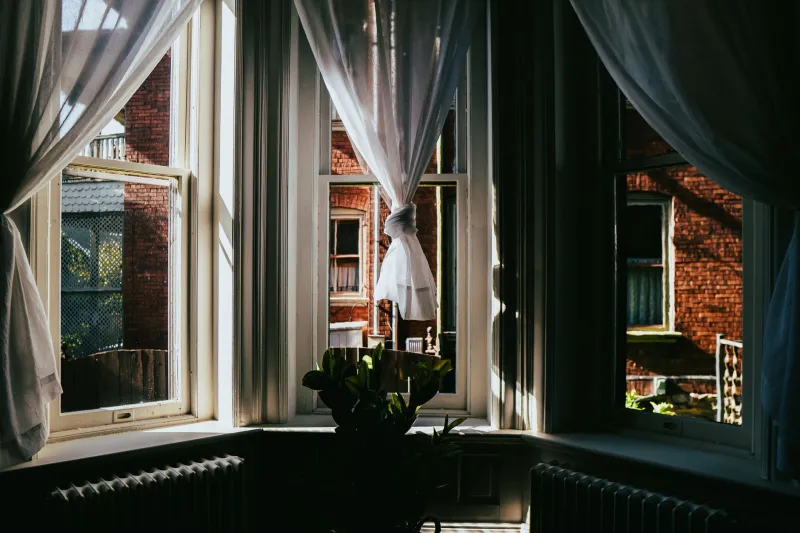
Try every window, not just the one in the living room. Sash windows should slide without a fight and stay put when you let go. Check the cords, the pulleys and the paint line around the frame. A sash painted shut is sometimes just a decorating shortcut. Sometimes it is a draught fix that created a damp problem. Either way, it is a conversation worth having.
Casement windows need a handle that pulls the sash tight against the seal. Open and close them a few times. Listen for grit, scraping or a latch that never quite catches. On uPVC windows, check the trickle vents above the glass, the rubber gaskets and the hinges. A window that will not lock is a security issue; a window that will not open is a ventilation issue.
Trickle vents and the quiet work of background airflow
Trickle vents are small, unglamorous and often misunderstood. They let a controlled amount of air in without asking you to leave a window wide open in February. If they are taped over, sealed with silicone or hidden behind a heavy blind, that is a red flag. Ask the seller or agent whether they have ever been blocked to stop a draught.
In leasehold flats, window changes often need consent from the freeholder or managing agent. A like-for-like repair is usually simpler than a full replacement. But if the whole block has single glazing and no trickle vents, you are not just buying a flat; you are buying a ventilation strategy that needs a plan.
Extractor fans: the tissue test and the timer test
Bathroom extractor fans are the unsung heroes of a damp-free home. Hold a piece of tissue against the grille while the fan is running. If it stays put, there is some pull. If it falls straight down, the fan is weak, blocked or ducted badly. Then listen for the run-on. A fan that stops the second you flick the switch is not clearing the moisture that has just filled the room.
In the kitchen, check whether the hob extractor actually extracts. A recirculating hood filters grease and little else; it is not a moisture solution. Look for a duct going outside, or ask where the air goes. If the answer is 'into the ceiling void', keep asking.
Damp is a pattern, not a patch
One patch of mould near a window is often condensation. Mould along a cold external wall, behind a bedhead or under a window board points to trapped moisture and cold bridging. Rising damp has its own signature, usually low down and accompanied by a tide mark. You are not there to diagnose the cause with certainty. You are there to notice a pattern and ask what has been done about it.
If a room smells musty even with the windows open, or if the seller has placed a wardrobe squarely against an external wall, move it if you can. Look behind furniture. Check the bottom of curtains. These are the places where a ventilation problem leaves its calling card.
What is worth negotiating before exchange
Not every airflow issue should become a deal-breaker. A broken extractor fan or a painted-shut window is a relatively small repair with a big effect on daily life. Ask for it to be fixed, or factor the cost into your offer. A failed mechanical ventilation system in a new-build flat is a different conversation; so is widespread condensation mould across several rooms.
Get quotes before you exchange, not after. A joiner can free a sash window; an electrician can replace a fan; a ventilation specialist can advise on a flat that has no background airflow at all. If the property is listed or in a conservation area, check what consent is needed before you promise to change anything.
The five-minute checklist
- Open every window and leave it open while you walk the room.
- Look for condensation, mould speckles and tide marks near glass and cold walls.
- Check trickle vents are open and unblocked.
- Run bathroom and kitchen extractors; use the tissue test and listen for run-on.
- Smell the air in cupboards and behind furniture.
- Ask when the property was last decorated and whether damp has been treated.
- Note anything you would want fixed before exchange.
A home that can breathe is easier to heat, cheaper to maintain and far less likely to greet you with a mouldy window frame in January. Five minutes with your hands on the frames is time well spent. At Domie, we would rather you test the airflow than fall for the paint.